Master digital creation with these essential guides for the Blender 3D modeling and animation software. Starting out in 3D can feel overwhelming, but the right blender 3d books can change everything. They break down complex tools into simple steps, turning confusion into confidance.
Whether you’re sculpting characters or building environments, a good guide acts like a patient mentor. It walks you through projects you’re actually excited to build. Let’s explore which books can help you unlock your creative potential and have fun doing it.
Product Comparison Table: 10 Best Blender 3d Books
| Image | Why We Like This Product | Editor’s Rating | |
 |
Learn Blender 5.1: The Ultimate Beginner’s Guide with Step-by-Step…
|
9.9 |
Read Review |
 |
Blender 3D Practical Guide 2025-2026: Modeling, Texturing, and Rendering
|
9.7 |
Read Review |
 |
Blender for Beginners Part 1: A reference guide to…
|
9.5 |
Read Review |
 |
Blender All-in-One For Dummies
|
9.2 |
Read Review |
 |
Blender For Dummies
|
9.0 |
Read Review |
 |
Blender 2025 Guide For Beginners: Master 3D Design, Animation,…
|
8.8 |
Read Review |
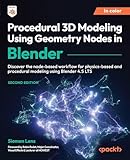 |
Procedural 3D Modeling Using Geometry Nodes in Blender: Discover…
|
8.6 |
Read Review |
 |
Blender for Beginners Part 2: Animate, light, and render…
|
8.3 |
Read Review |
 |
A Complete Guide to Character Rigging for Games Using…
|
8.1 |
Read Review |
 |
Sculpting the Blender Way: Explore Blender’s 3D sculpting workflows…
|
7.9 |
Read Review |
Quick Review For Top 10 Blender 3d Books
Learn Blender 5.1: The Ultimate Beginner's Guide with Step-by-Step Instructions for 3D Modeling, Rendering, and Animation

Learn Blender 5.1: The Ultimate Beginner’s Guide with Step-by-Step Instructions for 3D Modeling, Rendering, and Animation is a resource designed specifically for anyone starting from zero in the world of 3D creation. It assumes you have no prior experience with Blender or any other 3D software.
The guide’s core philosophy is to break down complex processes into managable, clear steps that you can follow along with at your own pace.
You begin with the absolute basics, like downloading Blender and understanding its interface. The guide walks you through navigating the 3D viewport, selecting objects, and using fundamental tools. This foundational knowledge is crucial, as it prevents you from feeling lost later on. From there, you move into simple 3D modeling.
You’ll learn how to create basic shapes, modify them, and combine them to form more complex objects. The instructions are visual and procedural, focusing on the ‘how’ and the ‘why’ behind each action.
The next major section covers materials and rendering. This is where you give your models color, texture, and realism. The guide explains how to use Blender’s shader editor in a straightforward way, demystifying concepts like principles BSDF and how lighting affects your scene.
Blender 3D Practical Guide 2025-2026: Modeling, Texturing, and Rendering

The Blender 3D Practical Guide 2025-2026: Modeling, Texturing, and Rendering is a focused resource for anyone ready to move from basic Blender knowledge to creating finished, professional-looking 3D artwork. It’s built on a simple idea: practical application is the best teacher. This guide skips the fluff and theory-heavy deep dives, instead placing you directly in the driver’s seat with hands-on projects that build real skills. You will start with the core foundation of any 3D scene: modeling.
The guide walks you through creating complex objects from simple shapes, teaching you the essential tools and modifiers that professionals use everyday. It’s not just about making a model; it’s about building it efficiently with clean geometry that will look great in the final render. You’ll learn to troubleshoot common issues and develop a workflow that makes sense, saving you hours of frustration down the line. Next, you’ll bring your models to life with texturing and materials.
This section demystifies Blender’s powerful shader nodes, showing you how to create realistic surfaces like weathered metal, glossy plastic, or rough fabric. You’ll learn about UV unwrapping without the headache, applying image textures, and crafting materials procedurally for maximum flexibility. The goal is to give you the confidence to make any material you can imagine, which is a huge step forward in the quality of your work.
Blender for Beginners Part 1: A reference guide to 3D modeling, shading, and animating workflows with Blender 4.5 LTS

The Blender for Beginners Part 1 is a reference guide designed specifically for anyone starting their 3D creation journey with Blender 4.5 LTS. This book focuses on the core foundations you need to understand. It aims to make the initial learning curve feel manageable and logical. You might feel overwhelmed by Blender’s vast interface and toolset. This guide breaks down the essential workflows into clear, structured parts.
It starts with 3D modeling, which is the process of creating your objects and scenes. You will learn the fundamental tools for building, editing, and shaping your ideas from basic forms. The book explains the why behind the tools, not just the how, which helps the concepts stick. Next, the guide moves into shading and materials. This is where you give your models color, texture, and surface properties. It makes them look like wood, metal, glass, or anything else you can imagine.
The book covers the basic principles of the Shader Editor in a straightforward way. You’ll learn to create simple, effective materials without getting lost in overly complex nodes right away. This section is crucial for making your models appear realistic or stylized according to your vision. Finally, the book introduces you to animating workflows. This part shows you how to bring your static models to life.
Blender All-in-One For Dummies

The Blender All-in-One For Dummies is your comprehensive guide to mastering every function of your modern blender. If you’ve ever felt intimidated by all the buttons on your appliance or wondered what the difference between puree and pulse really is, this book is designed for you. It breaks down the complexities into simple, manageable steps.
This book covers a wide range of blender types, from single-serve cups to full-sized high-performance models.
It starts with the absolute basics, like how to safely assemble and disassemble your blender. You’ll learn the purpose of every setting and attachment, demystifying the tool so you can use it with confidence. Theres no assumed knowledge here, making it perfect for beginners or anyone who’s never moved past the smoothie function.
Beyond basics, the guide provides a solid foundation in essential techniques.
It teaches you how to properly layer ingredients for the best consistency, how to clean your blender effectively, and how to troubleshoot common problems like leaks or a stuck blade. You’ll get clear explanations on why certain techniques work, which helps you understand the appliance rather than just following orders.
Blender For Dummies

The Blender For Dummies is designed for anyone who feels a bit lost in the kitchen appliance aisle. If the thought of using a blender brings up more questions than smoothie recipes, this is the model made with you in mind. We’ve focused on making every step, from setup to cleanup, completely straightforward.
You get a simple, intuitive control panel with clear buttons for the most common tasks. There’s no confusing array of settings to figure out.
Just a few options to get you started, like blend, pulse, and a dedicated setting for icy drinks. The goal is to get you blending without needing to consult a manual first. The pitcher is made from durable, BPA-free plastic that’s light and easy for you to handle. It features clear measurement markings on the side, so you can see exactly how much you’re making, which helps when following a recipe for the first time.
The lid seals tightly with a simple twist-and-lock mechanism to prevent any messy leaks.
This blender comes with a set of basic, practical accessories. You’ll find a recipe guide that starts with the absolute fundamentals, assuming no prior knowledge. It also includes a tamper, which is a handy tool for pushing ingredients down toward the blades safely from the top, ensuring everything gets mixed evenly.
Blender 2025 Guide For Beginners: Master 3D Design, Animation, and Rendering Techniques with Step-by-Step Instructions

The Blender 2025 Guide For Beginners: Master 3D Design, Animation, and Rendering Techniques with Step-by-Step Instructions
Starting with 3D creation can feel overwhelming. This guide is built specifically for that moment. It’s a structured path into Blender, taking you from your first open of the software to creating your own complete projects. The goal is to build real skills, not just follow a single tutorial. You learn the core principles that let you create anything you can imagine.
The book focuses on three main pillars: design, animation, and rendering. You’ll start with the fundamentals of 3D design. This means learning to model objects from simple shapes. The step-by-step instructions break down complex tools into manageable parts. You’ll understand why you use a specific technique, not just how to click buttons. This foundation is crucial for everything that comes next. Then, you move into bringing your models to life with animation.
The guide explains the timeline, keyframes, and rigging in plain language. You’ll animate simple objects first, which builds confidence for more complex character movement later. The instructions are clear and avoid assuming you have prior knowledge. Each chapter builds directly on the last, so your progress feels natural and solid. Finally, you’ll learn how to present your work through rendering. This section covers lighting, materials, and camera work.
Procedural 3D Modeling Using Geometry Nodes in Blender: Discover the node-based workflow for physics-based and procedural modeling using Blender 4.5 LTS

Procedural 3D Modeling Using Geometry Nodes in Blender: Discover the node-based workflow for physics-based and procedural modeling using Blender 4.5 LTS
This book is for you if you want to move beyond basic 3D modeling in Blender. It focuses on Geometry Nodes, which is a system for creating models and effects procedurally. That means you build rules and logic instead of manually shaping every single piece.
It’s a powerful shift in how you work, leading to more flexibility and complex results with less repetitive effort. The core of the book is the node-based workflow. You’ll learn to connect different nodes in a network, each performing a specific operation, to build your models from the ground up. This visual scripting method is intuitive once you understand the flow. It teaches you to think like a procedural artist, breaking down shapes into their fundamental operations.
This approach is central to mastering the content, as everything builds from these node networks. A key area covered is physics-based modeling. This isn’t about simulations for animation, but using physics principles to inform your models. Think about how gravity affects a chain, or how metal bends in a predictable way. You’ll learn to incorporate these concepts into your node trees. This makes your creations feel more realistic and grounded, because they follow real-world rules.
Blender for Beginners Part 2: Animate, light, and render in Blender 4.5 to create polished, optimized, and professional 3D scenes

The Blender for Beginners Part 2: Animate, light, and render in Blender 4.5 to create polished, optimized, and professional 3D scenes
This course picks up right where the basics leave off. It’s for you if you know your way around the Blender interface but want to bring your 3D scenes to life and make them look professional. The focus here is on the three core skills you need to finish a project: animation, lighting, and rendering.
You’ll learn how to combine these elements to create a final image or animation that looks polished and intentional. We start with animation principles in Blender 4.5. You’ll learn how to make objects move in a believable way, not just how to set keyframes. This includes simple movements and how to use Blender’s graph editor to smooth things out. The goal is to give your scene a sense of story or purpose through motion.
You’ll work on a practical project, so you’re applying these techniques as you learn them, which really helps them stick. Next, we tackle lighting, which is crucial for mood and clarity. You’ll learn about different light types in Blender and where to place them. It’s not about just making a scene bright; it’s about using light to guide the viewer’s eye and create atmosphere. We cover how to avoid flat, uninteresting renders and how to use shadows to your advantage.
A Complete Guide to Character Rigging for Games Using Blender

The Complete Guide to Character Rigging for Games Using Blender
This guide is for anyone who wants to bring their game characters to life with professional-quality animation. If you’ve ever felt stuck trying to make a 3D model move naturally in a game engine, this resource is built for you. It cuts through the complexity of rigging and focuses on the practical skills you actually need. You’ll start with the fundamentals of armature creation in Blender.
The guide walks you through building a clean, efficient skeleton from scratch. It’s not just about placing bones; it’s about understanding how their structure dictates realistic movement. You learn to create rigs that bend and flex correctly, avoiding those stiff, robotic animations that break immersion in a game. A major focus is on deformation. This is where your character’s mesh skin smoothly follows the bones underneath.
The guide covers weight painting in detail, showing you techniques to fix common issues like pinching or stretching at the joints. You’ll get clear methods for painting weights that give you clean elbow bends, smooth shoulder rotations, and natural-looking knees. These are the details that make a character feel solid and believable. The course then moves into controllers. These are the user-friendly handles that make animating your rig intuitive.
Sculpting the Blender Way: Explore Blender's 3D sculpting workflows and latest features, including Face Sets, Mesh Filters, and the Cloth brush

The Sculpting the Blender Way is your guide to mastering digital clay within the free, powerful Blender software. If you’ve ever wanted to move past basic modeling and into the artistic flow of sculpting, this resource is built for you. It focuses on the practical workflows and the newest tools that make Blender a serious contender for character, creature, and organic design. You’ll start by getting your digital workspace ready for sculpting.
The guide walks you through setting up your tablet, configuring Blender’s interface for efficiency, and understanding the core brushes. It’s about building a solid foundation so you can focus on creating, not fumbling with settings. You’ll learn how to block in major forms and gradually refine your sculpture with confidence, using Blender’s unique toolset to your advantage. A major focus is on the modern features that streamline complex tasks.
Face Sets, for example, are a game-changer for masking and isolating parts of your mesh. Instead of painstakingly painting masks, you can define entire regions with a few clicks. This makes detailing an ear or adding armor plating over a specific area much more intuitive. You’ll see how to use them for everything from initial blocking to adding fine details. The guide also demystifies powerful tools like Mesh Filters.
Blender 3d Books Buying Guide
Effective Blender 3D books provide clear tutorials that build skills progressively. The right one can turn frustration into confidence, guiding you from basic modeling to creating complex animations. This guide helps you pick the perfect book for your journey.
Your Current Skill Level
Are you a complete beginner or looking to master specific tools like sculpting? A mismatch here is the biggest reason books gather dust. A true beginner book assumes no prior knowledge and explains the interface first. More advanced texts jump straight into professional workflows, which can be overwhelming if your not ready.
Project-Based vs. Tool-Based Learning
Do you learn best by creating a finished robot or character from start to finish? That’s project-based. Other books are tool-based, dedicating chapters to modifiers, lighting, or the compositor. Think about what keeps you motivated: completing a cool project or systematically understanding each menu.
Book Publication Date and Blender Version
Blender updates fast. A book written for version 2.7 will be missing critical features and have a different interface than version 4.0. Always check the publication date and which Blender version it covers. Using an old book can lead to confusion when buttons or functions have moved.
Visuals and Supporting Files
Clear, high-quality screenshots are non-negotiable. You need to see exactly what your screen should look like at each step. The best books also provide downloadable project files. This lets you deconstruct the author’s work or catch up if you get stuck, which is invaluable for learning.
Frequently Asked Questions About Blender 3d Books
What’s the best Blender book for a complete beginner?
Look for books that start with the absolute basics. A good beginner book will explain the interface and core concepts like modeling, materials, and rendering. It should have clear, step-by-step projects to build your confidence from the first chapter.
Do I need a book if there are so many free tutorials online?
Books offer a structured learning path, which can be really helpful. Online tutorials are great, but they can be scattered. A well-organized book builds your skills in a logical order, ensuring you don’t miss fundamental concepts.
How do I know if a book is for my version of Blender?
Always check the publication date and the Blender version it covers. Blender updates frequently, so a book for version 2.8 might be quite different from 3.0 or later. Most publishers will state the version clearly on the cover or in the description.
Should I get a general book or one focused on a specific topic?
Start with a general introduction book first. Once you grasp the basics, then a specialized book on animation, sculpting, or VFX can be perfect. Trying to learn character rigging before you know how to move a cube is usually to frustrating.
Are physical books or e-books better for learning Blender?
This is personal preference. A physical book is nice to have open next to your computer. An e-book often has clickable links to download project files and sometimes has color images, which is a big plus for seeing materials and lighting correctly.
What if the book uses and older version of Blender?
The core principles in older books are often still valid, but the location of buttons and some tools may have changed. It can be a more challenging way to learn, as you’ll need to search for where things are in your newer version. For a smoother start, a recent book is usually best.
Do these books come with the project files to practice with?
Most reputable Blender books do include access to project files. Always check the book’s description or the publisher’s website to confirm. Having these files is crucial for following along with the lessons effectively.
Closing Thoughts
To bring your digital creations into reality, having the right instructional guides is the essential next step. Think of a good book as a patient mentor. It sits on your desk, ready to help when you’re stuck on a tricky tool or a new concept. It gives you the foundation to build your skills at your own pace, turning confusion into clear understanding. This solid base makes every project more enjoyable and less frustrating.
Your journey with the software is unique, and the best resource is one that matches your goals. Whether you’re focusing on animation, modeling, or visual effects, there’s a guide written for you. Investing in a few well-chosen blender 3d books can make a huge difference. They consolidate knowledge and provide reliable reference that you can return to again and again, helping you create work you’re truly proud of.